Mosquito Mesh for Homes: The Complete Guide to Types, Sizes, Cost, and Installation
A practical, answer-first guide for homeowners choosing mosquito mesh for windows, doors, and balconies.
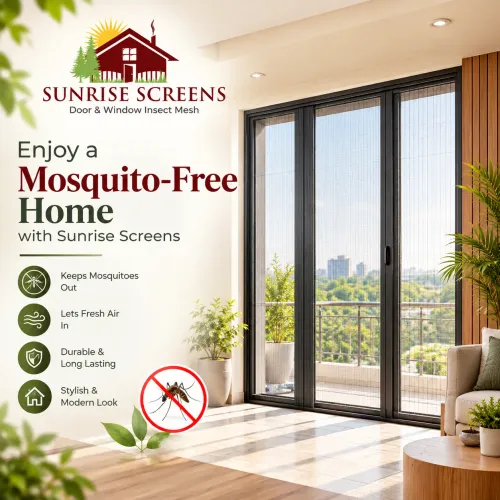
Quick answer: Mosquito mesh is a fine screen fitted over windows, doors, balconies, and vents that lets air and light in while keeping mosquitoes and other insects out. For most homes, a fiberglass or aluminum mesh of 18×16 strands per inch is the best balance of airflow, protection, and price. Stainless steel mesh suits homes that need extra durability, and pet-resistant polyester mesh suits homes with cats or dogs.
Table of Contents
- What is mosquito mesh?
- Why do homes need mosquito mesh?
- What mesh size stops mosquitoes?
- Types of mosquito mesh compared
- Types of mosquito screen systems
- How to choose the right mosquito mesh
- How much does mosquito mesh cost?
- How to install and maintain mosquito mesh
- Common mistakes to avoid
- Frequently asked questions
What is mosquito mesh?
Mosquito mesh (also called insect screen, bug screen, or window screen) is a woven or knitted net made of fine fiberglass, aluminum, stainless steel, or polyester threads, held in a frame or track. Its openings are small enough to block mosquitoes, flies, and most other flying insects while still allowing ventilation.
Mosquito mesh is different from a mosquito net (the bed-hanging type). A mesh is a permanent or semi-permanent barrier fixed to the building. A net is a portable barrier that covers a bed.
Why do homes need mosquito mesh?
Mosquitoes are more than a nuisance. Species such as Aedes, Anopheles, and Culex can transmit diseases including dengue, malaria, chikungunya, and West Nile virus, depending on the region. Physical barriers are one of the most reliable ways to reduce indoor bites because they work without chemicals, electricity, or daily effort.
Key benefits of installing mosquito mesh at home:
- Fewer bites and less disease risk: Blocks entry points where mosquitoes get indoors.
- Natural ventilation: Windows can stay open day and night, which cuts reliance on air conditioning.
- Chemical-free protection: No sprays, coils, or vaporizers needed, which is useful for children, elderly people, and anyone with respiratory sensitivity.
- Protection from other pests: Also keeps out flies, moths, wasps, and other insects.
- Long-term savings: A one-time installation replaces recurring spending on repellents.
What mesh size stops mosquitoes?
Mesh size is measured as the number of strands per inch in each direction (for example, 18×16). A higher number means smaller holes.
Direct answer: An 18×16 mesh (about 1.1–1.4 mm openings) stops common house mosquitoes. For areas with tiny biting midges or sandflies, choose a finer mesh such as 20×20 or 22×22 or finer.
Mesh size | Protection level | Airflow | Best use |
|---|---|---|---|
16×14 | Basic | Highest | Large insects, low mosquito-pressure areas |
18×16 | Standard | High | Most homes, windows, and doors |
20×20 | High | Moderate | Mosquito-heavy areas, near water |
22×22 or finer | Very high | Lower | Midges and sandflies, coastal or forest-edge homes |
A finer mesh blocks more insects but also reduces airflow slightly and collects dust faster, so choose the finest mesh your climate and cleaning routine can support.
Types of mosquito mesh compared
The four most common materials are fiberglass, aluminum, stainless steel, and polyester (including pet-resistant types).
Material | Durability | Cost | Visibility | Best for |
|---|---|---|---|---|
Fiberglass | Moderate | Low | Good | Budget-friendly everyday windows |
Aluminum | Good | Low to medium | Moderate | Dry, inland homes; rigid look |
Stainless steel | Excellent | High | Good | Coastal, high-security, or long-life needs |
Polyester (pet-resistant) | High tear resistance | Medium | Good | Homes with cats, dogs, or children |
Fiberglass mesh
Fiberglass is the most widely used option. It is flexible, does not rust or dent, and is inexpensive. It can tear if pulled or scratched, so it is not ideal for homes with pets.
Aluminium mesh
Aluminum is stiffer and keeps its shape well. It resists rust but can dent or oxidize in salty coastal air.
Stainless steel mesh
Stainless steel is the strongest option. It resists corrosion, cutting, and tearing, and many versions also resist break-ins. It costs more, but it can last many years.
Pet-resistant polyester mesh
This is a thicker, vinyl-coated polyester weave designed to withstand claws and paws. Airflow and clarity are slightly lower than standard mesh.
Types of mosquito screen systems
The frame or system matters as much as the mesh. The common systems are
- Fixed frame screens: Permanently fitted on windows that are rarely opened. Simple and affordable.
- Sliding screens: Slide on tracks for windows and balcony doors. Easy to operate and widely used.
- Hinged (openable) screens: Open like a door. Suitable for doors and larger openings.
- Roller (retractable) screens: Roll into a casing when not in use. Good for a clean view and flexible use.
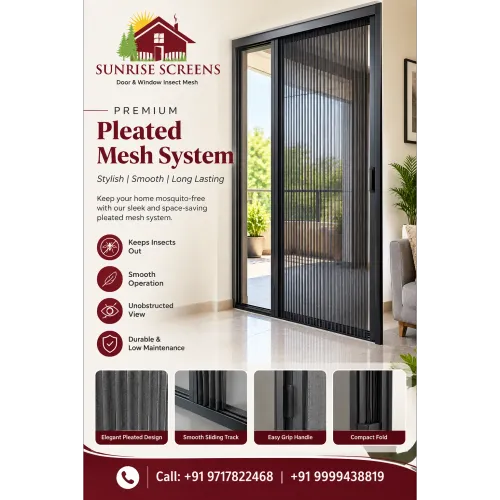
- Pleated screens: Fold like an accordion for wide openings such as patio and balcony doors.
- Magnetic or Velcro DIY screens: Quick, renter-friendly, and low-cost, but less durable and less airtight.
How to choose the right mosquito mesh
Use this five-step checklist:
- Measure every opening. Record the width and height of each window, door, and vent.
- Identify your risk. Near water, drains, gardens, or forests? Choose a finer mesh (20×20 or finer).
- Pick the material. Fiberglass for budget, stainless steel for longevity or coastal air, and polyester for pets.
- Match the system to the opening. Sliding for windows, hinged or pleated for doors, and roller for flexible use.
- Check frame quality. Look for powder-coated aluminum frames, tight corners, and no gaps at edges. Mosquitoes will use any gap larger than the mesh holes.
How much does mosquito mesh cost?
Prices vary by country, material, brand, and installation complexity. As a general pattern:
- DIY adhesive or magnetic kits are the cheapest option.
- Fiberglass or aluminum with a standard frame sits in the budget to mid-range.
- Stainless steel, roller, and pleated systems are the premium options.
Always request a quote based on your measured sizes and compare at least three suppliers. Ask whether the price includes measurement, fitting, and warranty.
How to install and maintain mosquito mesh
Installation basics
- Measure the opening accurately, allowing for the frame or track.
- Choose a frame style that fits the window or door.
- Fix the frame securely and check that there are no gaps at the corners or edges.
- Test the movement of sliding or hinged parts before finishing.
Professional installation is recommended for roller, pleated, and large sliding systems. Simple fixed or DIY kits can be installed at home.
Maintenance tips
- Clean the mesh every one to two months with a soft brush or vacuum, then wipe with mild soapy water.
- Avoid high-pressure water and harsh chemicals that can damage the mesh or coating.
- Inspect for small holes and repair them promptly with patch kits.
- Lubricate sliding tracks lightly and keep them free of dust.
- Replace torn or sagging mesh instead of leaving gaps.
Common mistakes to avoid
- Buying the wrong mesh size for the local insect problem.
- Leaving gaps around frames, vents, and balcony doors.
- Ignoring other entry points such as exhaust fan openings, chimneys, and drain pipes.
- Choosing the cheapest mesh for a pet home, which can tear within weeks.
- Skipping cleaning, which blocks airflow and shortens mesh life.
- Relying only on mesh while leaving standing water around the home. Remove stagnant water from pots, coolers, tires, and trays weekly to stop breeding.
Frequently asked questions
Does mosquito mesh really work?
Yes. When properly fitted with no gaps, mosquito mesh blocks mosquitoes from entering through windows and doors, and it does so without chemicals.
What is the best mosquito mesh for windows?
A fiberglass or aluminum mesh of 18×16 strands per inch in a sliding frame is the most popular and practical choice for windows. Upgrade to 20×20 or stainless steel for heavier mosquito pressure or coastal air.
What is the best mosquito mesh for homes with pets?
Pet-resistant polyester mesh or stainless steel mesh. Standard fiberglass can be torn by claws.
Will mosquito mesh block airflow?
A little, but not significantly. Standard 18×16 mesh keeps ventilation high. Finer meshes reduce airflow slightly.
How long does mosquito mesh last?
Fiberglass typically lasts a few years, aluminum and polyester longer, and stainless steel can last the longest with proper care. Lifespan depends on sun, weather, cleaning, and handling.
Can I install mosquito mesh myself?
Yes, for fixed, magnetic, and simple frame screens. For roller, pleated, and large sliding systems, professional installation gives a tighter seal.
Is mosquito mesh better than a mosquito net?
They solve different problems. Mesh protects the whole room or home at all times. A net protects only the sleeping area. Using mesh on windows and doors plus a net where extra protection is needed gives the best coverage.
Does mosquito mesh keep out other insects?
Yes. It also blocks flies, moths, wasps, and most flying insects, depending on mesh size.
Can mosquito mesh be used on balconies?
Yes. Pleated, sliding, or hinged systems are commonly used to enclose balconies and let people use the space in the evening without bites.
Key takeaways
- Mosquito mesh is a permanent, chemical-free barrier that protects homes from mosquitoes and other insects.
- 18×16 mesh is the standard choice; use 20×20 or finer for heavy infestation or tiny insects.
- Fiberglass is budget-friendly, aluminum is rigid, stainless steel is the most durable, and polyester suits pet homes.
- A well-fitted frame with no gaps matters as much as the mesh itself.
- Combine mesh with removal of standing water for the strongest mosquito control.